
2026 Affordable Housing Summit Rescheduled

November 20, 2026

At the Universities at Shady Grove, Rockville, MD

9630 Gudelsky Dr, Rockville, MD 20850

Plenary:

The Housing Production Conundrum: Housing Affordability or Housing Shortage?


Sessions to include

  • Community-Led Development
  • Technical Innovation in Housing: Modular Urban Construction
  • Opportunities in the 21st Century Road to Housing Act
  • How to Navigate Housing Finance Obstacles  
  • Special Housing Needs: Disabled, Senior, and Veteran Housing  Renter Protections

Registration is now open on EventBrite:

REGISTER HERE

Working Together

We work to create solutions for everyone’s needs, including affordable housing in Montgomery County, by connecting community members, leaders, and experts to address challenges and promote housing opportunities.


Our work in affordable housing is made possible by the generosity of our sponsors. Sponsorships start at $250 — every contribution helps create real impact.
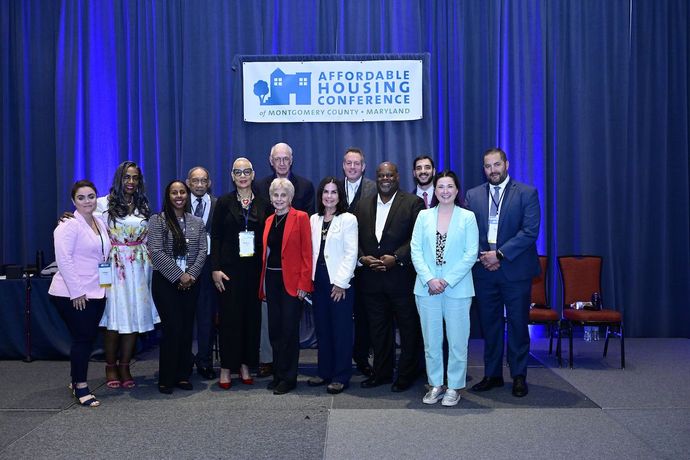


Property of the Summer
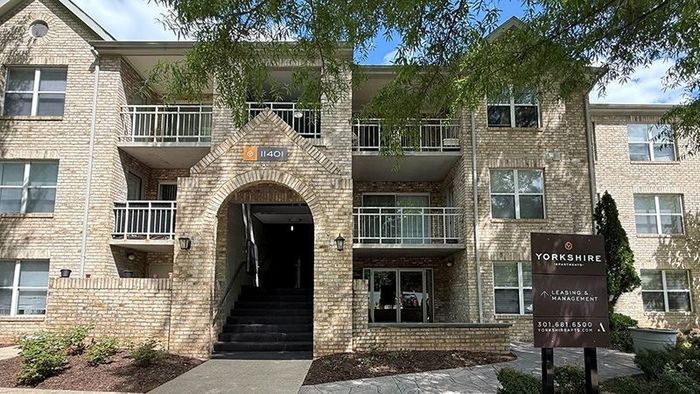
Yorkshire Apartments

11401 July Dr, Silver Spring, MD 20904

Donaldson Impact Investments, New York Life Investment Management, and nonprofit developer Housing Initiative Partnership, Inc. (HIP) announced the acquisition of Yorkshire Apartments, a 326-unit community in Silver Spring, Maryland. The $79.4 million transaction will preserve the property as attainable housing and provide long-term stability for residents.


The community will transition from market-rate to mixed-income housing, with 50% of units affordable to households earning up to 60% of AMI and 50% remaining market-rate.


Supported by Montgomery County’s PILOT program, the project combines tax abatements, equity from New York Life and Donaldson Impact Investments, and financing from JPMorgan. HIP will provide onsite resident services, including bilingual support, financial wellness programs, educational resources, and food assistance.


The partnership aims to expand access to quality affordable housing while helping working families and residents manage rising housing costs in Montgomery County.


View Our Events Page
View our Facebook Page
View Our Twitter Feed

Highlight from 2025 Winter/Spring Journal

The Role of Faith-Based Organizations in Affordable Housing Initiatives

by Jay Shuman

Partner, Nelson Mullins

page 32


Legislative Update

October 1, 2025
This bill requires banking institutions, credit unions, and mortgage lenders to include a provision in all conventional home mortgage loans that allows any of the existing borrowers to assume the mortgage in the event of a divorce. This applies to both new and existing mortgages. You can review the new legislation in full here .
October 1, 2025
Landlords can no longer charge late payment penalties based on the full rent amount. Maryland already capped late rent penalties at 5%, but some landlords applied that percentage to the entire month’s rent, even if most had already been paid. What’s new: Landlords must now calculate late fees only on the unpaid portion of rent. Weekly leases remain capped at $3/week, with a $12/month maximum. Example: Rent is $1,000, a tenant pays $800 on time, $200 is late. Before: fee could be $50. Now: fee maxes at $10. As a result of the new law, tenants who make partial payments will not be over-penalized. Landlords will need to revise lease forms, and unenforceable clauses could lead to tenant lawsuits for damages and attorney’s fees. You can review the new legislation in full here .
October 1, 2025
This new legislation prohibits community associations from prohibiting or unreasonably restricting the construction and rental of accessory dwelling units (ADUs) on lots with primary single-family detached dwelling units. A homeowners association has the authority, but not the obligation, to treat an ADU as a separate lot for purposes of voting and assessments. You can review the new legislation in full here .
October 1, 2025
The law currently states that community associations cannot impose unreasonable limitations on an owner who wants to install a solar collector system on their roof or the exterior walls of improvements exclusive to them, which significantly increases the cost or decreases the efficiency of solar installations. However, the term “significantly” was not precisely defined, leading to varied interpretations and enforcement. The new law sets an objective standard that a restriction is unreasonable if it would increase the cost of the solar collector system installation by at least 5% over the projected cost of the initially proposed installation, or if the restriction would reduce the energy generated by the solar system by at least 10% below the projected energy generation of the initially proposed installation. To show that the community association’s restriction is unreasonable, the owner needs to provide documentation prepared by an independent solar panel design specialist. Community associations may prohibit or restrict the installation of a solar collector system in the common elements/areas and regulate its size, number, or placement. You can review the new legislation in full here .

Contact Us

Contact Us


We’d love to hear from you!

Just choose the most convenient method and we’ll get back to you as soon as we can.

P.O. Box 2111

Rockville, MD 20847 

Contact Us